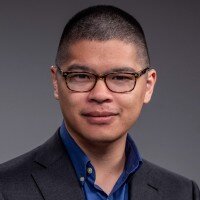
Benjamin Chang
New strategy research organization / think tank, seeking to directly assess what concretely describable AI capabilities plausibly achievable within twenty years (if any) could genuinely threaten the literal end of the United States, in the same way that a large-scale nuclear war could. We analyze these catastrophic scenarios in as concrete a fashion as possible, informed by the methods of security studies. We are seeking clear thinkers more than people with particular backgrounds; the main criteria for selection is good performance on a series of open-ended essay questions.
Stream overview
See our 3-pager description of the org
Our current research agenda spans both diagnosis of potential “paths to policide” if AI progress continues, as well as policy options and grand strategy for surviving them. Collaborators would work with us to advance this agenda: further details will be determined on a case-by-case basis.
The next step in our evaluation consists of answering a number of open-book, unlimited-time essay questions. We think these are a good illustration of the kind of multidisciplinary analysis you’d be asked to do as a researcher with our org. So we’d encourage checking them out. Note: you will only have the opportunity to answer these questions if you advance to the next stage for the Strategy & Forecasting track.
Mentors
Ben is in the process of co-founding a new AI strategy research organization, to launch in the fall of 2026. His co-founder is Eli Rose, formerly a Program Director for AI safety grantmaking at Coefficient Giving. See here for more about our new organization's research agenda and what we're looking for in a collaborator.
Ben is currently a Resident at Constellation, where he just finished drafting a book-length report on national security and advanced AI that will ground our org’s intellectual vision. Ben served in the White House Office of Science and Technology Policy during the Biden-Harris administration, got his PhD in Security Studies from MIT, and has also worked at/for RAND, CSET, IARPA, and the Office of Net Assessment, among other misadventures.
Mentorship style
Fellows we are looking for
We're looking for exceptional minds capable of pushing the analytic frontier in current discussions of advanced AI systems. There are no hard requirements other than demonstrated analytic skill.
We expect that strong candidates will likely have one or more of the following: pre-existing familiarity with ongoing debates around advanced AI; deep knowledge of at least one adjacent literature (e.g., Chinese policymaking both domestic and foreign; cybersecurity; US defense policy; biosecurity; compute governance; nuclear security; etc.); prior experience developing or evaluating frontier AI models; prior government or government-adjacent experience, especially in national security roles; and/or a graduate degree in a relevant field (e.g. philosophy, history, security studies, international relations, or law, etc.).
Notably, although our work has a national security focus, we think many candidates without prior background in national security in particular would be strong fits. A good test: if you look at our essay questions and think they would be fun to answer, please apply.