A lot of people write to us before applying, and the same questions come up often, so we have gathered the most common ones here. If something you are wondering about is not covered, please just get in touch. We are always glad to hear from people thinking about applying.
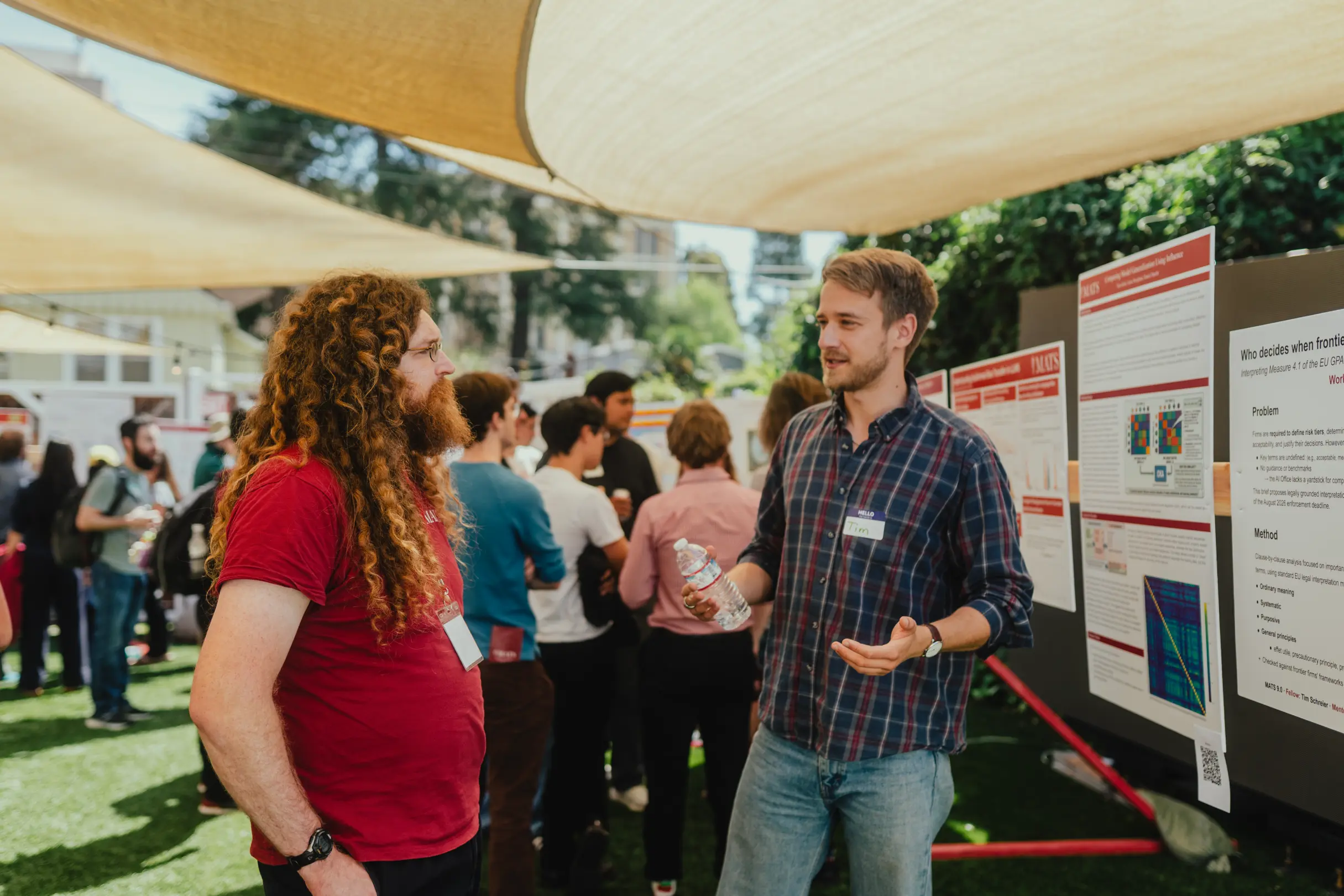
It is built for researchers with some experience behind them, including people moving into AI safety from a related field. If you have a strong track record in AI safety or significant expertise you think can help the effort, we’re excited to hear from you. If you are nearer the start of your path, the MATS Fellowship tends to be the better home, and it is well worth a look.
No. Many strong applicants have neither, though “outstanding postdoc” is a reasonable intuition about the minimum level of skill and seniority we expect from strong candidates. That experience can be gained through work or independent research.
The Residency is aimed at more experienced researchers who are comfortable operating relatively independently, while the Fellowship is suitable for anybody who would benefit from the direct mentorship and is able to participate in an intake.
Yes. The two programs are aimed at different kinds of candidates, but the applications are assessed separately, so applying to one has no bearing on how the other is assessed.
Applications for this round close at the end of October, Anywhere on Earth, so you have right up to the end of that day wherever you happen to be. We start the assessment process as soon as the deadline passes, and we aim to let everyone know where they stand by the end of November. If you are shortlisted, we will tell you then, and the next stages follow soon after, all wrapped up by the middle of December. And if the timing feels tight this time, there is no need to worry: we run a few intakes a year, so another round is never far off.
We ask everyone for the names of two referees. What they add is a sense of what you are like to work with, from people who know you well. And there is no need to worry about unexpected emails landing in someone’s inbox. We only get in touch with referees later in the process, and we always come to you first and get your okay before contacting anyone. Academic referees are welcome, and so are professional or engineering ones.
Yes. AI tools are part of how most people work these days. What we ask is that you are open about what you did yourself and what you’ve deferred to AI, so we can see how you work and think.
Each call for applications has a fixed nominal start date, so there is a set point when the program begins. If you are accepted, we are happy to defer your start date by up to six months, depending on your circumstances.
It is a full-time commitment, and we ask residents to be with us in person at one of our offices for at least a third of the program. If you think you are an outstanding candidate but need more flexibility than this, please ask and we will work with you on a case-by-case basis. This includes remote and part-time arrangements (usually once someone has been shortlisted or offered a place).
We are in London, Berkeley, and Washington DC. You can let us know your preferred location when you apply.
Very possibly. If you are a PhD student close to writing up, we can probably accommodate your situation. If you are earlier than that, it is usually better to apply once you have finished. If you are on sabbatical or in a job, we would still encourage you to apply, and if you are offered a place we will work through the practical details with you.
The areas listed on our website are examples, not a closed list, so please do not rule yourself out if your topic is not named there. We are open to a wide range of directions, as long as the work ties clearly to AI safety and reducing catastrophic risk. If you are not sure whether yours fits, just ask us.
Visa sponsorship rules change frequently and depend on your specific situation. We can’t promise up front that we can sponsor every candidate. That said, we’re genuinely interested in continuing the conversation. When we get further along in the process, we will ask you to send us your details and we’ll work with our immigration team to look into your specific case.
We sort these things out individually once you have been shortlisted, taking your research and your circumstances into account. If you are a founder with your own company or existing funding, you are still very welcome to apply, and we will find an arrangement that works if your application is successful.
You will find the details on the stipend, accommodation, and other practicalities on our website.