A home for long-horizon AI safety research that reduces catastrophic risk
The Residency is run by MATS, which has accelerated 630+ AI safety researchers who have coauthored 220+ papers with 19,000+ citations. MATS alumni have co-founded organizations such as Apollo Research, Resolution, and Theorem Labs. Residents have access to advisors from organizations including UK AISI, the Center for AI Standards and Innovation (CAISI), OpenAI, Google DeepMind, and Anthropic.
.webp)
The work
The Residency exists to advance the research that most reduces catastrophic risk from AI: keeping AI-assisted research checkable, maintaining oversight of systems that outstrip human review, building evaluations and safety cases that make safety decidable, and making agentic and multi-agent systems safe from first principles. These are foundational challenges that take years, not weeks. Propose the work you believe matters most; see the Apply page for how we assess fit.
Residency program overview
The MATS Residency gives you 6 to 24 months to pursue your own AI safety research agenda with a high degree of independence. Residents receive $155,000 to $285,000 plus benefits and research compute with no preset cap. They work from a MATS office in London, Berkeley, or Washington, DC, alongside the MATS Residents and Fellows, with access to advisors from frontier AI companies, AI safety/security institutes, and the wider AI safety community. The Residency is open to researchers from a wide range of backgrounds: we assess the quality and seriousness of your work, not the titles on your CV.

Where you fall within this range will reflect your circumstances, including the cost of living at your office location, seniority, and experience.

- A dedicated budget for attending relevant conferences, workshops, and other research events
- Flexibility for hybrid working; comprehensive medical, dental, vision, and life insurance
- Retirement benefits through Roth 401(k) and Traditional 401(k) plans for US-based employees, or a pension scheme for London-based employees
- 17 days of annual paid time off for US-based employees
- 20 days of annual leave plus bank holidays for London-based employees
- Catered lunches and dinners for in-office workdays

You become part of the MATS Research community, which includes current Residents, Fellows and staff, extension participants, and a network of mentors in safety organizations.

- Up to 30 Residents per year
- Three intake windows per year, with rolling start dates. The 2027 Winter intake window opens 25 August 2026 and closes 31 October 2026 (AoE, Anywhere on Earth).

Occur after each block (typically 12 weeks), providing dedicated opportunities for Residents to receive focused, calibrated input from the program’s advisors while retaining ownership of their research direction.

No preset cap; compute is provisioned against research need.

6 to 24 months, depending on track.

MATS offices in London, Berkeley, or Washington, DC. The Residency is hybrid, with Residents expected to be in person for at least a third of their Residency, at any of the offices.

Full-time. Academics on sabbatical from their home institution may be considered for part-time participation on a case-by-case basis.

Three intake windows per year, with rolling start dates. The 2027 Winter intake window opens 25 August 2026 and closes 31 October 2026 (AoE).

Visa support where required, plus up to $25,000 in relocation support, including eligible relocation costs for a partner and dependent children.
What residents get
A structured research program, with targeted input from AI safety experts.
A structured research program, with targeted input from AI safety experts
Every Resident works within a custom program built around their research, with structured milestone progress reviews. At each progress review, the MATS Residency team provides each Resident with concrete feedback that informs the support and resources needed for the next research block. The team also coordinates input from the program's advisors, calibrated to the research direction and each Resident's preferred level of independence.
The opportunity to work alongside leading advisors
The Residency is built around researcher independence. Between milestones, Residents decide when to share their work, seek feedback, pursue new ideas, and/or develop collaborations with leading experts across the AI safety field, including UK AISI, US CAISI, OpenAI, Google DeepMind, Anthropic, and others.
Advisors are a resource, not a line of oversight. Where relevant, Residents may also gain access to specialized research resources and opportunities to work with state-of-the-art models. This support is designed to strengthen the research while preserving each Resident’s intellectual ownership and autonomy.
Practical support designed to remove blockers
Residents receive tailored practical support to keep their research moving, including compute, technical assistance, travel and conference funding, research management, reviewer feedback, and research governance. MATS offices also provide opportunities to attend talks, meet other researchers, and connect with the wider AI safety community.
A path to lasting impact
The Residency provides an onward path beyond the program that is tailored to each track: Bridge Residents receive career development and placement support; Anchor Residents receive substantive feedback at the 12-month milestone that guides the next 12 months of research; and Incubation Residents move through ideation, and potentially fundraising and launch.
Not every project will achieve its original goal. The Residency is built to enable Residents to take risks and pursue ambitious research even when results differ from expectations. Every Resident leaves with a body of reviewable work, 4 to 8 weeks of post-Residency support, and continued access to the MATS Research community.
Where you'll be based
The Residency is based in MATS offices in London, Berkeley, and Washington, DC.

The Residency is based in MATS offices in London, Berkeley, and Washington, DC. Applicants indicate their preferred office when applying, but there is no formal base office assignment. The program is hybrid, with Residents expected to spend at least a third of their Residency working in person at any of the offices.
- London places Residents close to UK AISI, Google DeepMind, Anthropic's London office, Apollo Research, GovAI, Oxford, Cambridge, and the UK safety and policy ecosystem.
- Berkeley provides access to the Bay Area AI safety ecosystem, including Anthropic, OpenAI, Redwood Research, METR, Coefficient Giving, and the research community around Constellation, FAR Labs and UC Berkeley CHAI.
- Washington, DC offers proximity to the US Center for AI Standards and Innovation (CAISI), RAND CAST, Georgetown CSET, and the policy institutes and government bodies shaping US AI governance.
The Residency program is consistent across offices, with the same standards, track structure, and milestone cadence. Residents are encouraged to work in the MATS office that best supports their research through proximity to collaborators, institutions, and the surrounding ecosystem.
Who the MATS Residency is for
The Residency is designed for ambitious, longer-term work that does not fit neatly within conventional academic or industry settings.
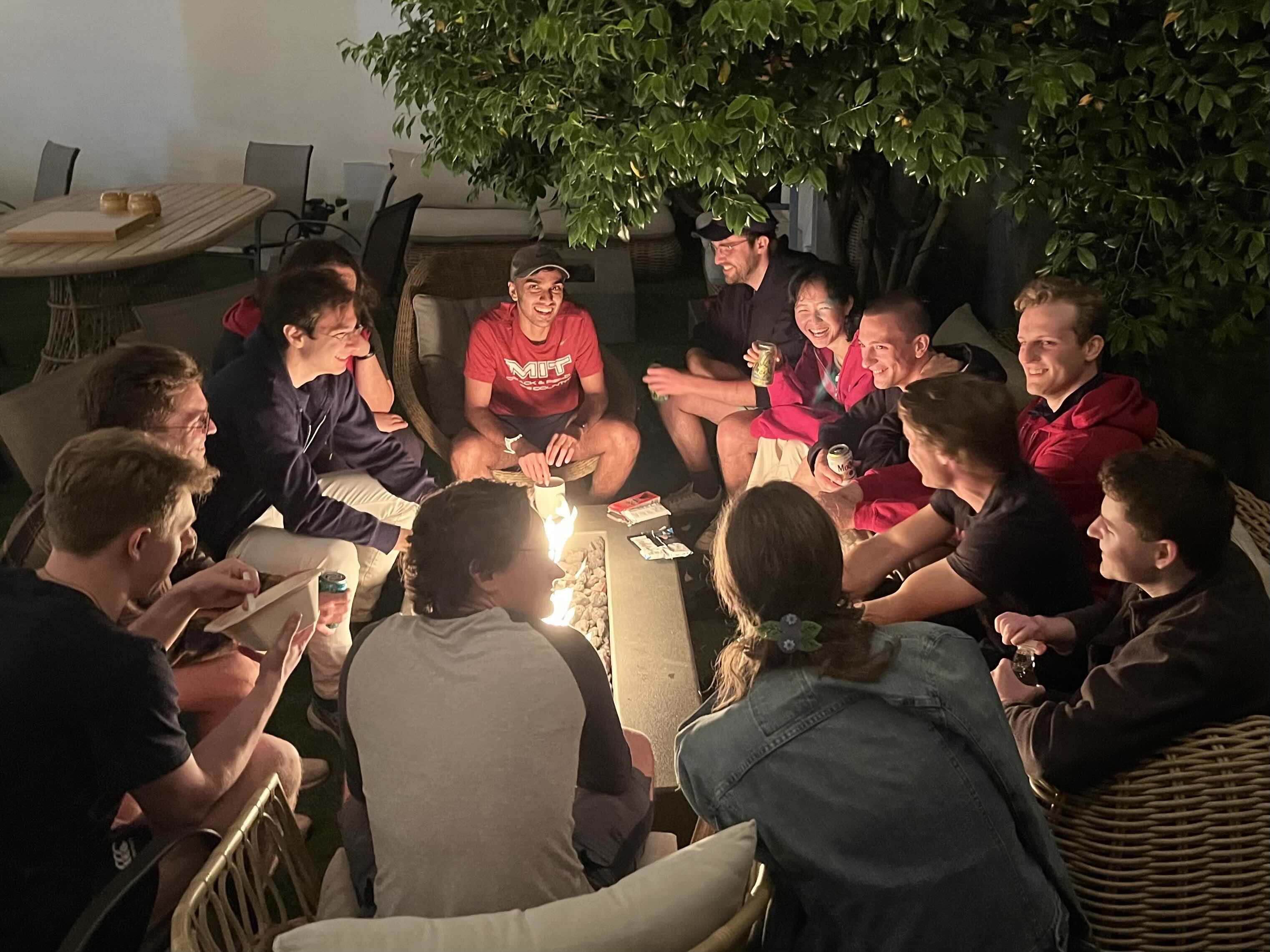
These projects may require more time, sustained operational and research support, and high-level input from advisors at key research decision points. This input is intended to strengthen the work while preserving the Resident’s intellectual ownership and research independence.
Some researchers are ready for AI safety roles but face constraints such as timing, geography, or hiring cycles. Others are transitioning into AI safety from adjacent fields such as ML, policy, or governance and need time to build a body of safety-relevant work. Founders may need to validate their ideas for a new research organization before seeking funding, while experienced researchers outside the traditional PhD or postdoctoral path may need an institutional home for long-horizon work.
Ultimately, we’re interested in researchers of varying backgrounds who are committed to advancing research that reduces the catastrophic risk of increasingly capable AI systems. See the Apply page for the current priority areas and how MATS assesses fit.
If you are unsure whether you fit, we would rather you apply than rule yourself out.
Email us at: