MATS Autumn 2026
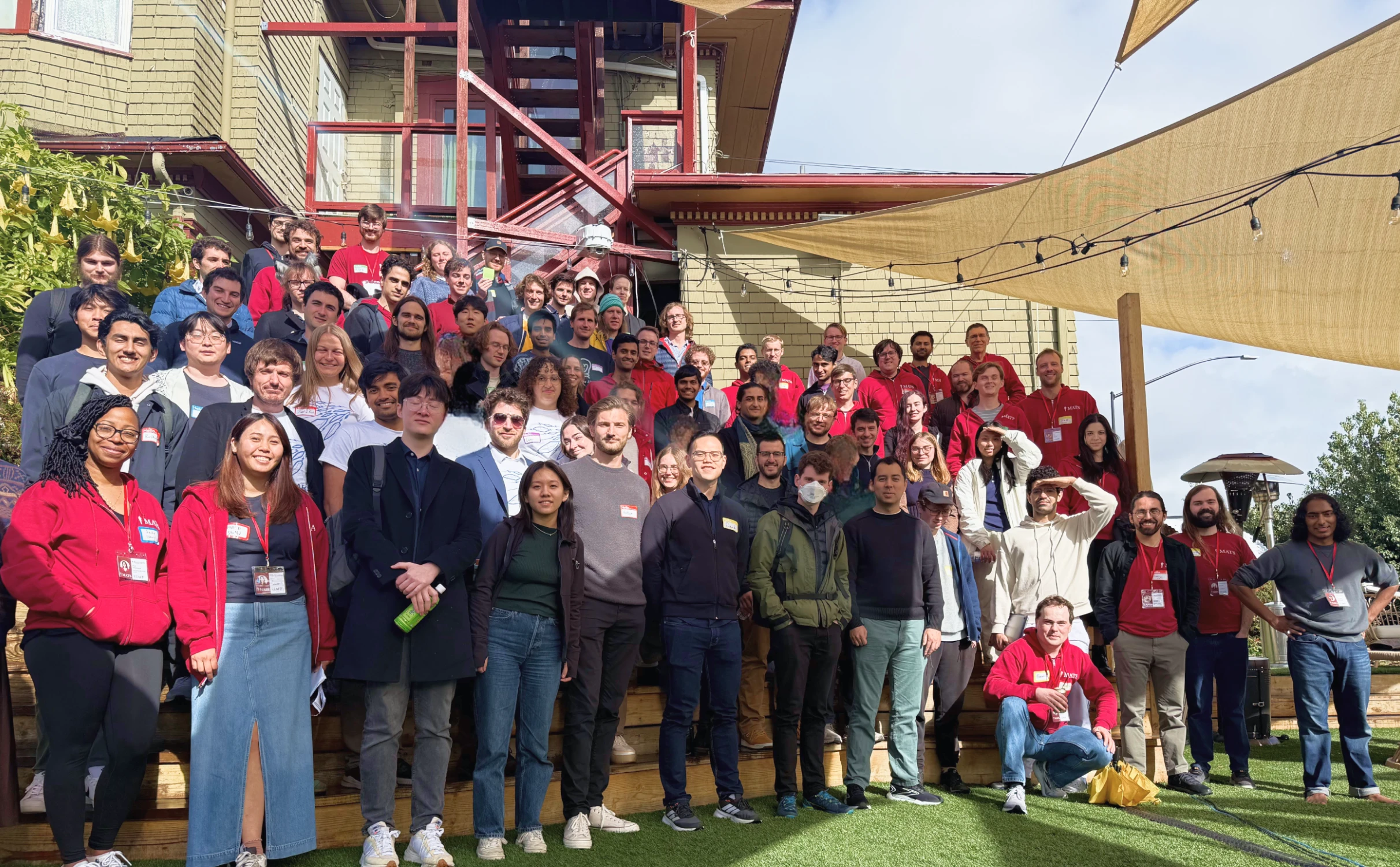
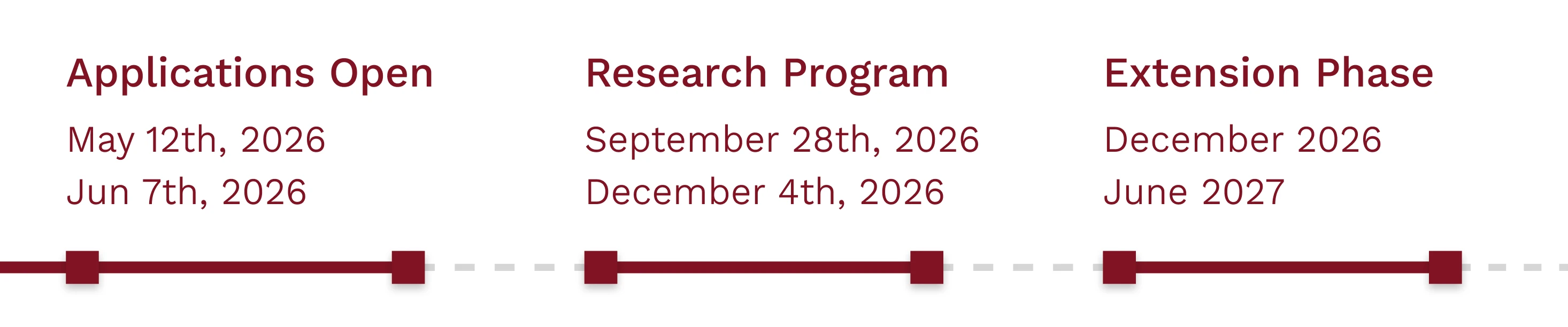
The Autumn 2026 program will run for 10 weeks in Berkeley, CA and London, UK from September 28th to December 4th. Fellows will receive mentorship from world-class researchers and at organizations like Anthropic, Google DeepMind, OpenAI, Redwood Research, and ARC, with the option to apply for a 6–12 month funded extension beyond the main program. For the first time, we are running Founding & Field-Building and Biosecurity tracks.
Applications are now closed.
Program phases
Key dates for the application and admissions timeline
Applications typically open several months before the program begins. Applicants complete a multi-stage admissions process, beginning with a general application. Depending on the tracks, streams, and mentors they apply to, applicants may also complete additional evaluations such as interviews, work tests, coding assessments, or writing samples before final admissions decisions are made.
In stage one, applicants apply to one or more tracks (broad research areas): Empirical, Theory, Strategy & Forecasting, Policy & Governance, System Security, Biosecurity, and Founding & Field-Building. In stage two, advancing applicants choose specific streams within those tracks, each led by one or more mentors with their own research agenda. You can view this list as a grid here.
George Robinson
This stream will focus on monitoring, stress-testing safety methods, and evals, with a focus on risks from scheming AIs. Examples include (black-box) AI control techniques, white-box monitors (probes etc.), chain-of-thought monitoring/faithfulness, building evaluation environments, and stress-testing mitigations.
Advance global DNA synthesis through projects on customer screening, mapping synthesis companies, benchtop integration, and sequence of concern annotation.
This stream focuses on physical access controls for biotech governance: live pathogen repositories, CROs, cloud labs, cell-free expression systems, plasmid vendors, or secondhand lab equipment.
On high-conviction areas, you'll tackle specific open research questions and assess interventions; on exploratory areas, you'll conduct deep dives to determine whether they're worth pursuing. Your findings will directly shape Sentinel's grantmaking strategy and provide strategic guidance to the broader biosecurity community.

Implementing SL4/5 and searching for differentially defense-favored security tools.



We are excited to supervise projects:
- Study the causes and implications of (multi-agent) situational awareness;
- Contribute to LawZero's Scientist AI, in the form of contextualization and uncertainty estimation.

Lee's stream will focus primarily on improving mechanistic interpretability methods for reverse-engineering neural networks.

The SL5 Task Force will build out a prototype SL5 datacenter this year together with frontier AI labs. This will be a massive research and engineering project with many avenues for spinning out new organizations and research programs. This project is urgent due to this technology being needed in the next 1 to 2 years.