Program Systems Associate
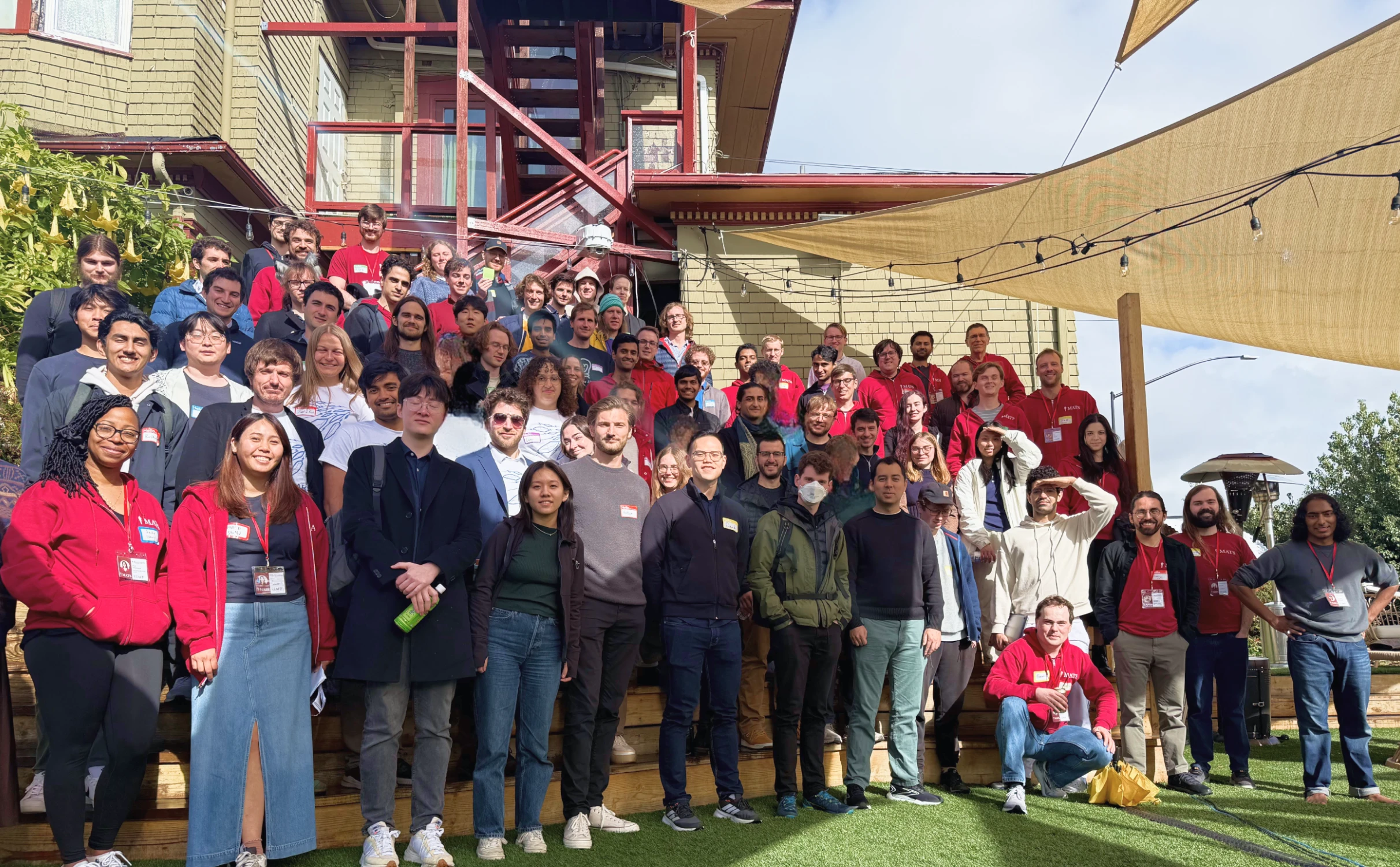
Build and maintain MATS' internal infrastructure, including databases, data collection forms, and integrations. Refactor legacy systems and collaborate across teams to improve infrastructure and establish best practices. Create ambitious, shared infrastructure for the AI safety talent ecosystem. Requires strong database design skills and a product mindset; software engineering or LLM-assisted coding proficiency preferred. Priority deadline has passed but still accepting applications.
Updated
March 10, 2026
Deadline
is
Feb 24
Location
Berkeley
About The Organization
MATS Research aims to find and train talented individuals for what we see as the world’s most urgent and talent-constrained problem: reducing risks from advanced artificial intelligence. Our mission is to solve the talent bottleneck in AI safety and security through training, credentials, and community. We believe that ambitious researchers from a variety of backgrounds have the potential to contribute to the fields of AI alignment, interpretability, governance, and security research. Through our research fellowship, we aim to provide the mentorship, financial support, and community necessary to aid this transition. Please see our website for more details.
The Role
As the Program Systems Associate, you will build and maintain the core infrastructure that powers MATS. You’ll take ownership of our internal database, applications stack (currently Airtable/Fillout), and integrations, ensuring our team can reliably collect, analyze, and share information across mentors, fellows, and partners. In the short term, you’ll refactor legacy systems and unify fragmented databases. In the long term, you’ll think ambitiously about integrating automations and AI tools into our operations, designing services that scale with our rapidly growing organization, and building shared infrastructure for the broader AI safety & security talent ecosystem.
You’ll collaborate closely with the Program Talent Manager to improve our Applicant Tracking System, ship features that improve decision quality and turnaround time, and set standards for permissions and data governance. You’ll likely collaborate with nearly every team at MATS, giving you a uniquely comprehensive view of the organization. This is a product-focused role: you’ll talk to users, elicit needs, scope projects, track requirements, make pragmatic build-vs-buy calls, and deliver robust tools.
Who We're Looking For
We welcome applications from software engineers and technical generalists with a strong product sense. You might be:
- A full-stack or platform engineer who enjoys owning internal tools, data models, and integrations at a small, fast-moving org
- A data/operations engineer with experience turning messy processes into clean schemas, reliable pipelines, and simple UIs
- A product-minded builder from a startup, research lab, or nonprofit who thrives on talking to users and shipping pragmatic solutions
If you don’t match one of these profiles but can otherwise demonstrate that you’ll excel in this role, we still encourage you to apply!
Key Responsibilities
- (In the first 1-4 months) Refactor current database systems, based on Airtable, and set standards for database use going forward. These systems are used for program functions like tracking fellow status, preferences, etc.
- Build new backend systems to assist with repeatable processes like data analysis, communications, sharing with collaborators, etc.
- Build frontend interfaces for internal data collection and presentation, with an emphasis on ease of use.
- Assist the Program Talent Manager with infrastructure for the MATS application process.
- Create a strong “Customer Relationship Management” system to track our relationship with partners, alumni, and others.
- Manage permissions for these systems.
- Report to the Program Lead (Juan Gil).
Essential Qualifications and Skills
- Strong understanding of database design patterns and experience with implementing them in practice
- Security mindset with regards to data privacy
- Good eye for usability and user experience of frontend interfaces
- Sufficient software engineering experience to write custom code for our database workflows OR proficiency with using LLMs to assist with writing code (e.g. Claude Code)
Desirable Qualifications and Skills
We expect especially strong applicants to have deep experience in at least one of the following areas:
- SQL and a modern scripting/typed language (e.g., Python or TypeScript), plus experience with APIs and webhooks
- Using LLMs within backend workflows through e.g. API calls
- Airtable
- Fillout
- Integration and automation tools like Zapier and Make
What We Offer
- High-leverage opportunity to identify and help launch the careers of talented AI safety & security researchers
- Professional development and skill enhancement opportunities
- Collaborative and intellectually stimulating work environment
- Competitive salary (see below)
- Access to our office spaces in Berkeley, London, and other partnered office spaces
- Medical insurance, including dental, vision, and life insurance
- Traditional and Roth 401(k) options
- Visa support for excellent candidates
- Meals provided Monday-Friday
Compensation
Compensation will be $100,000 to $180,000 annually, depending on experience.
Working hours and location
40 hours per week. Successful candidates can expect to spend most of their time working in-person from our main office in Berkeley, California. We are open to alternative working arrangements for exceptional candidates.
How to Apply
Please fill out the form here. If you use an LLM chatbot or other AI tools in this application, please follow these norms.
Applications will be reviewed on a rolling basis, with priority given to candidates that apply by February 24. The anticipated start date for this role is no later than March 30, though preference will be given to candidates who can start sooner. We can make exceptions for great candidates.
Join us in shaping the future of AI safety & security research!